Let's Talk About Your AI Journey, Experiences, Challenges, and Expectations
Hello everyone!
Before we begin exploring artificial intelligence, discovering new AI tools, learning automation techniques, and understanding how technology is transforming the world, let's start with a simple question.
How are you doing right now, and how is AI going for you?
We are living in a time when artificial intelligence is becoming part of almost everything around us. From writing emails and creating images to developing software, analysing information, automating business operations, and learning new skills, AI is changing how people work, communicate, create, and make decisions.
Continue Reading
A few years ago, many of these possibilities seemed like something we would only see in science fiction movies. Today, people can access AI-powered tools directly from their computers and smartphones. Tasks that once required several hours of manual effort can sometimes be completed in minutes with the right tools and instructions.
But here is something worth discussing. While artificial intelligence is developing rapidly, are we all keeping pace with it? Are we using these technologies effectively? Are they genuinely making our lives easier, or are we still trying to understand where they fit into our everyday routines?
That is exactly why we want to start this series with a conversation rather than a technical tutorial.
We want to hear from you.
Artificial Intelligence Is Moving Fast. How Are You Keeping Up?
Artificial intelligence is no longer limited to researchers, technology companies, or software developers. Students are using AI to understand difficult subjects, professionals are using it to improve productivity, business owners are exploring automation, content creators are experimenting with AI-generated media, and developers are using AI assistants to accelerate software development.
The opportunities are growing across almost every industry. However, the experience is different for everyone.
Some people have already integrated AI into their daily routines. They use AI assistants to organise their schedules, prepare reports, research topics, write content, generate ideas, and solve technical problems. For them, AI has become a regular productivity companion.
Others are still experimenting with different tools. They might have tried ChatGPT, Gemini, Claude, Copilot, or other AI platforms but have not yet discovered how to use them effectively. They understand that AI has potential, but they are unsure which tools are genuinely useful and which are simply creating unnecessary noise.
There are also people who have not started using AI seriously. They may be curious, uncertain, concerned about privacy, or simply overwhelmed by the number of tools appearing every week.
All these experiences are valid. Nobody needs to become an AI expert overnight. The important thing is to understand what these technologies can do, where they can help, and how we can use them responsibly.
So, where do you currently stand in your AI journey?
Are You Already Using AI in Your Everyday Life?
Think about your regular activities. Do you use artificial intelligence when you start your working day, study for an examination, manage your business, communicate with customers, or complete personal projects?
Perhaps you use an AI assistant to draft professional emails, summarise lengthy documents, translate information, prepare presentations, or brainstorm new ideas. Maybe you use AI-powered search tools to find information more efficiently or coding assistants to understand programming concepts.
You might even be using AI without consciously realising it. Recommendation systems, navigation applications, spam filters, voice assistants, translation services, and many other digital experiences already rely on forms of artificial intelligence.
The interesting question is not simply whether you use AI. It is whether you have discovered applications that genuinely improve your everyday experience.
For example, a student might save time by asking an AI assistant to explain a complicated mathematical concept using simpler examples. A marketing professional might use AI to generate campaign ideas and then refine them using personal experience and market knowledge. A small business owner might automate repetitive customer enquiries so that more time is available for important business decisions.
The value of AI depends on how thoughtfully it is applied.
We would love to know which everyday task has become easier because of AI in your life.
Which AI Tools Have You Tried So Far?
The AI tools ecosystem is expanding quickly. New platforms, features, assistants, and automation solutions are appearing regularly. Some focus on writing, others specialise in image generation, video production, programming, research, data analysis, or business workflows.
You may have experimented with ChatGPT for conversations, writing, research, and problem-solving. Perhaps you have explored Google Gemini for assistance with information and productivity. Maybe Claude has helped you work with documents and code, while Microsoft Copilot has introduced AI assistance into your professional workflow.
There are also specialised tools for creative work. Image-generation platforms can turn written descriptions into visual concepts. AI video tools can help creators experiment with video production. Voice-generation platforms can produce synthetic speech, while transcription applications can convert recorded conversations into written text.
For developers, AI-powered coding assistants can suggest code, explain errors, help with debugging, and support the development process. For businesses, automation platforms can connect applications and move information between different systems without requiring every step to be performed manually.
However, trying many tools does not necessarily mean getting the best results. Sometimes one well-understood tool can be more valuable than ten applications that are rarely used.
We want to hear about your experience. Which AI tools have you tried? Which ones have impressed you? Have you discovered a tool that you believe more people should know about?
Your recommendations could help someone else find the right starting point.
Is AI Actually Improving Your Productivity?
One of the biggest promises of artificial intelligence is improved productivity. The idea is straightforward: reduce repetitive work, accelerate certain tasks, improve access to information, and allow people to concentrate on activities that require human judgement and creativity.
But does that promise match your actual experience?
Consider a typical working day. You might spend time responding to emails, preparing reports, organising information, attending meetings, researching competitors, updating spreadsheets, and completing administrative activities.
Some of these tasks can be supported by AI. An assistant can help prepare an initial email draft, summarise a document, organise unstructured information, or suggest a structure for a report. Automation can connect different applications and reduce repetitive data entry.
However, there is an important difference between completing a task quickly and completing it correctly. AI-generated information still requires review. Outputs may contain mistakes, misunderstand instructions, or miss important context. Human judgement remains essential, particularly when decisions affect customers, finances, safety, or professional responsibilities.
The real benefit comes when AI is used as an assistant rather than treated as an unquestionable authority.
Have you noticed a measurable improvement in your productivity since you started using AI? Are you saving time, improving the quality of your work, or simply experimenting with new possibilities?
We are interested in your honest experience, including situations where AI has not delivered the expected results.
What Is Your Biggest Challenge With AI?
Although AI tools are becoming easier to access, using them effectively is not always straightforward.
One common challenge is knowing what to ask. A person might open an AI assistant, enter a basic instruction, receive an average response, and conclude that the tool is not very useful. In reality, the result may depend heavily on the clarity of the instruction, the context provided, and the way the task is structured.
Another challenge is choosing between platforms. There are so many AI tools that comparing their features, pricing, limitations, and practical value can become confusing. A beginner may not know whether to start with a general-purpose assistant, a specialised writing tool, an image generator, or an automation platform.
Accuracy is another important concern. AI systems can produce convincing answers that contain incorrect information. Users need to learn how to verify important claims, check original sources, and recognise situations where professional expertise is necessary.
Privacy and security also deserve attention. People should be careful about sharing confidential business information, personal records, customer data, passwords, or sensitive documents with AI services. Understanding data handling policies and organisational requirements is an important part of responsible AI adoption.
For some people, the biggest concern is the impact of AI on employment. They wonder whether automation will replace certain tasks, change professional roles, or create new opportunities. These questions deserve serious discussion rather than unrealistic promises or unnecessary fear.
What is the biggest obstacle you are facing right now? Is it understanding AI, selecting the right tools, writing effective prompts, controlling costs, protecting data, or applying AI to your work?
Your answer can help us identify the topics that deserve more attention in this series.
Are You Interested in AI Automation?
Artificial intelligence and automation are closely connected, but they are not exactly the same thing.
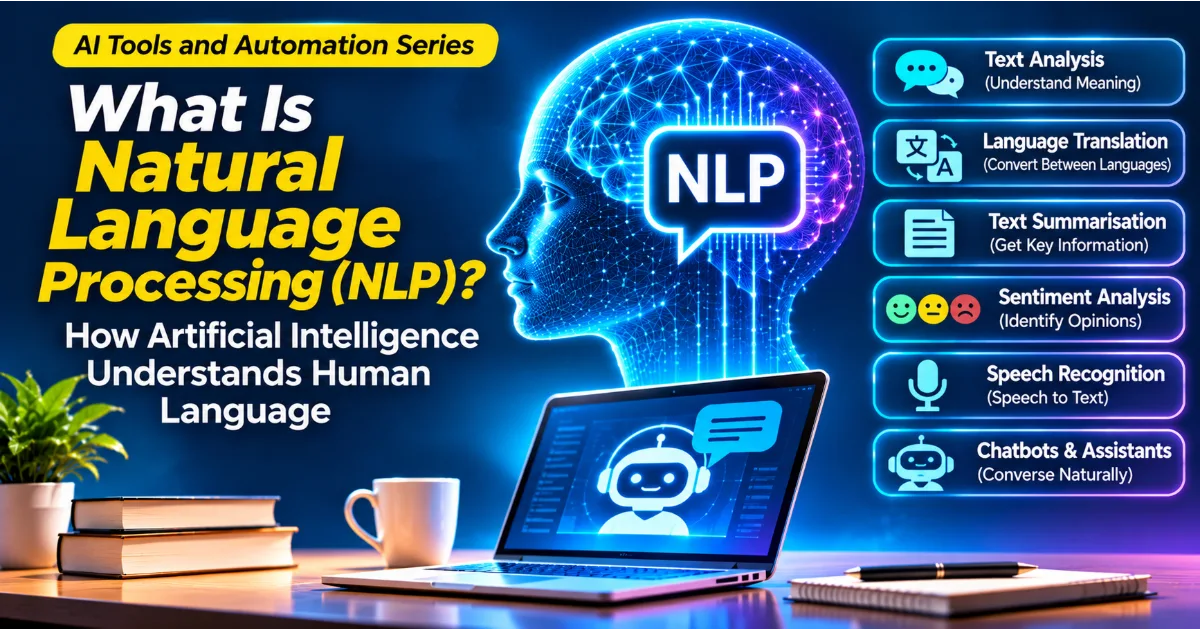
Artificial intelligence enables systems to perform tasks that traditionally require capabilities such as language understanding, pattern recognition, prediction, and content generation. Automation focuses on executing predefined processes with minimal manual intervention.
When these technologies work together, they can create powerful workflows.
Imagine receiving a customer enquiry through a website. An automated workflow could capture the enquiry, store the information in a database, notify the appropriate team member, and prepare a response for review using an AI assistant.
Similarly, a business might receive invoices through email. An automated process could identify incoming documents, extract relevant information, organise the records, and send the extracted details for verification.
A content creator might maintain a workflow that collects ideas, organises research, prepares draft outlines, and sends reminders for scheduled publication. A software team might use automated processes to organise bug reports, categorise issues, and notify developers when new tasks arrive.
Tools such as Zapier, Make, and n8n provide different ways to connect applications and build automated workflows. AI capabilities can extend these workflows by helping interpret information, classify requests, generate content, and support decisions within defined limits.
However, successful automation requires thoughtful planning. Not every task should be automated. Processes involving sensitive information, financial approvals, legal decisions, or important customer interactions may require human supervision.
Have you automated anything in your personal or professional life? Or is workflow automation something you would like to learn from the beginning?
How Do You Think AI Will Affect Your Career?
Artificial intelligence is influencing the skills people need across different professions. The changes will not look identical in every industry, but many roles are likely to evolve as AI capabilities become more widely adopted.
For students, understanding AI can become an additional advantage when combined with strong subject knowledge, communication skills, critical thinking, and practical experience.
For working professionals, learning how to use AI tools may help improve efficiency and support new responsibilities. A person working in marketing might explore AI-assisted research and content planning. An accountant might investigate document processing and spreadsheet assistance. A designer might experiment with generative tools while continuing to develop creative judgement and visual expertise.
For software developers, AI-assisted programming can support coding, testing, debugging, and documentation. However, understanding architecture, security, performance, and software engineering principles remains important.
For entrepreneurs and small business owners, AI may provide access to capabilities that previously required larger teams or specialised resources. It can support research, customer communication, operational planning, and marketing activities, provided the outputs are reviewed appropriately.
The important question is how individuals and organisations will adapt.
Will AI create new opportunities in your profession? Will it change the skills employers expect? Are you already learning something new because of artificial intelligence?
We would particularly like to hear from people working in different industries because their experiences can reveal how AI adoption varies across professions.
What Would You Like to Learn in This Series?
This AI Tools and Automation series is intended to be a practical learning space where we explore artificial intelligence from beginner concepts to real-world applications.
We do not want this series to become another collection of technical terms without practical value. The objective is to help readers understand technologies, discover useful tools, develop new skills, and apply what they learn to real situations.
We plan to explore AI assistants, content-generation platforms, image and video tools, coding assistants, research applications, business productivity solutions, and workflow automation platforms.
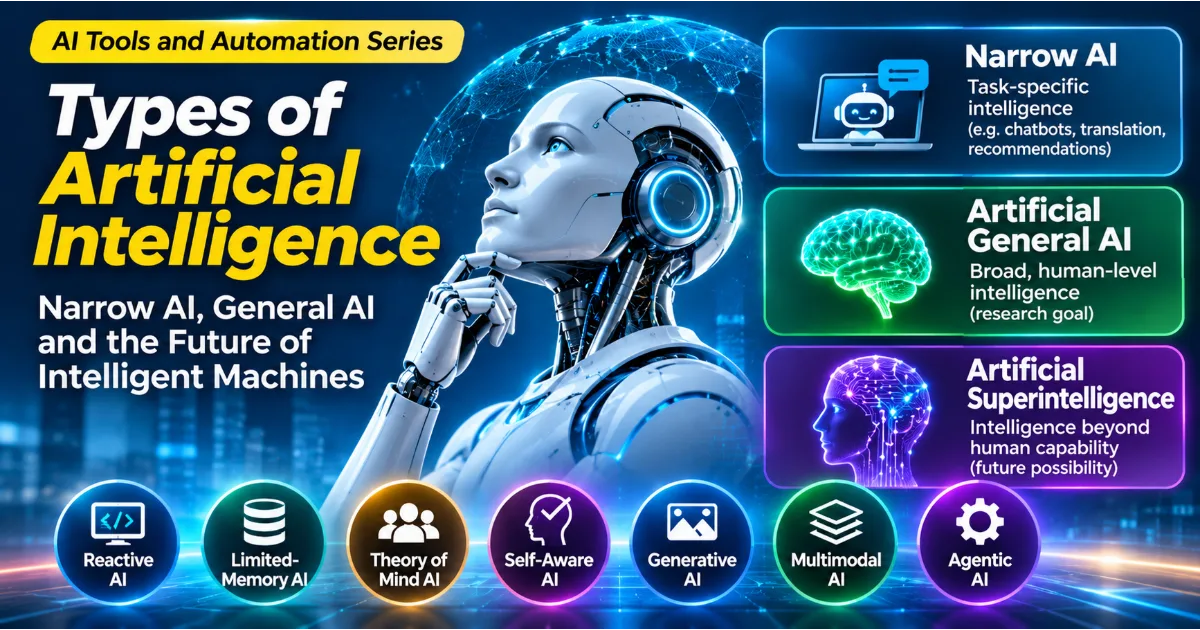
We will also discuss prompt engineering, large language models, generative AI, AI agents, API integrations, data analysis, and responsible AI adoption.
For readers who are new to technology, we will explain concepts in accessible language and use practical examples. For experienced professionals and developers, we will explore more advanced applications, integrations, and automation techniques.
The series will gradually move from understanding AI to using it effectively and eventually building practical AI-powered workflows.
Your suggestions will help us decide which topics need deeper explanations and which tools deserve detailed tutorials.
A Conversation About the Human Side of Artificial Intelligence
There is one more important question we want to discuss.
As artificial intelligence becomes increasingly capable, how do you feel about the changes taking place?
Are you excited about the possibilities? Do you feel curious about what comes next? Are you concerned about job security, misinformation, privacy, or excessive dependence on technology?
Perhaps you feel a combination of excitement and uncertainty.
That is understandable. Every major technological shift creates opportunities as well as challenges. The internet transformed communication, education, commerce, and entertainment. Smartphones changed how people access information and interact with services. Artificial intelligence is introducing another significant shift in how digital tasks are performed.
But technology alone does not determine whether progress is beneficial. The way people design, adopt, govern, and use technology matters enormously.
AI should help people expand their capabilities, improve access to information, and solve meaningful problems. It should not remove the importance of critical thinking, creativity, accountability, or human relationships.
Learning how to work alongside AI may become increasingly important, but learning when not to rely on it is equally valuable.
We want this series to include these broader discussions alongside practical tutorials because understanding AI requires more than knowing which buttons to click.
Let's Start With Your Experience
Now it is your turn.
We want to make this first post an open conversation. You do not need to be an AI expert, a developer, or a technology professional to participate. Whether you have used AI extensively or have only tried it once, your experience is valuable.
Tell us how you are doing today and how artificial intelligence is going in your life.
Are you using AI regularly, occasionally, or not at all? Which AI tools have you explored? Have they helped you save time, learn something new, improve your work, or solve a difficult problem? What has disappointed you? What would you like to learn next?
If you are a student, tell us how AI is influencing your learning experience. If you are a working professional, share how it is changing your daily responsibilities. If you are a business owner, tell us whether AI and automation are helping your operations. If you are a developer or technology enthusiast, share the tools and workflows you have been experimenting with.
You can also share your concerns, doubts, and questions. Sometimes the most useful learning begins with a question that many people are thinking about but have not yet asked.
We encourage everyone to participate respectfully, share genuine experiences, and learn from different perspectives. There is no competition to use the most advanced tool or adopt every new technology. Everyone has a different starting point, and every useful learning experience can help someone else.
Our Goal: Learn, Experiment, and Grow Together
The world of artificial intelligence will continue to change. New models will emerge, existing platforms will introduce new capabilities, and automation will become more accessible across industries.
Keeping up with every development may not be realistic or even necessary. What matters is developing the ability to identify useful technologies, understand their limitations, evaluate their results, and apply them to meaningful problems.
Through this AI Tools and Automation series, we hope to build a valuable knowledge resource for people who want to understand and use AI more confidently.
We will explore tools, explain concepts, share practical examples, discuss automation techniques, and examine how artificial intelligence is influencing different areas of life and work.
But this should not be a one-way learning experience. Your questions, recommendations, experiences, and feedback can make the series more useful for everyone.
So, let's begin with a simple conversation.
How are you doing right now? And honestly, how is AI going for you?
We are listening. Share your experience in the comments and let's learn from one another.
#AITools #ArtificialIntelligence #AIAutomation #FutureOfAI #LearnAI