Artificial Intelligence is changing the way people work, communicate, learn, shop, and solve problems. Behind many of the intelligent applications we use every day is a technology called Machine Learning. When a shopping website recommends a product, an email application identifies spam, a bank detects suspicious transactions, or a navigation application estimates traffic conditions, machine learning may be helping the system make its decisions.
Machine Learning has become one of the most important areas of modern technology because it allows computers to identify patterns in information and improve their performance through experience. Instead of requiring programmers to write a separate instruction for every possible situation, developers can train models using data and algorithms. These models can then make predictions or decisions when they receive new information.
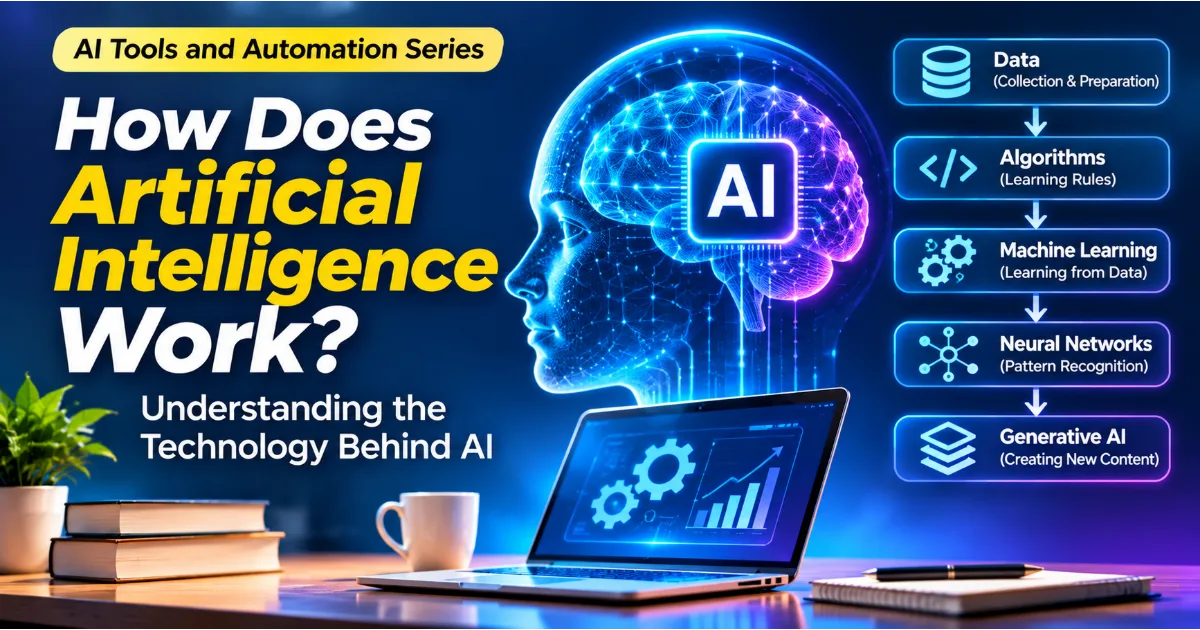
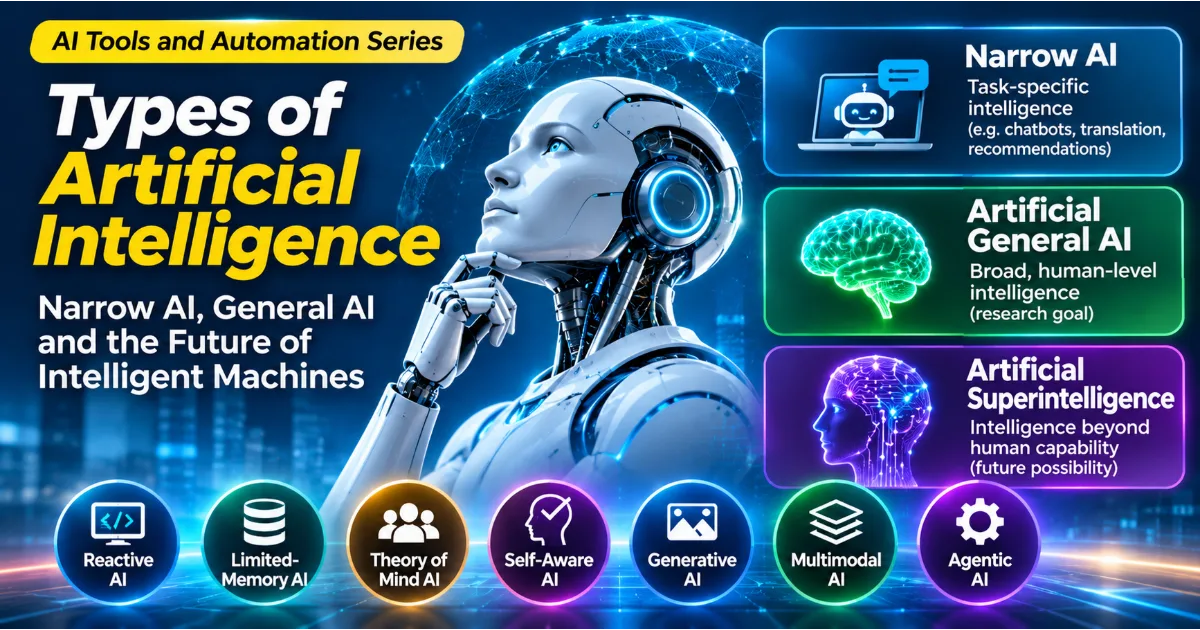
Although machine learning is often discussed alongside Artificial Intelligence, the two terms do not mean exactly the same thing. Artificial Intelligence is the broader field concerned with creating systems capable of performing tasks associated with intelligent behaviour. Machine Learning is a major branch of AI that focuses on learning patterns from data.
Understanding machine learning is useful not only for software developers and data scientists but also for business owners, students, professionals, educators, and anyone interested in the future of technology. It helps people understand how modern applications work, how automated decisions are produced, and why AI systems sometimes make mistakes.
This article explores the meaning of machine learning, how it works, its major types, popular algorithms, real-world applications, advantages, limitations, and the skills required to begin learning it.
Continue Reading
What Is Machine Learning?
Machine Learning is a branch of Artificial Intelligence that enables computer systems to learn patterns from data and use those patterns to make predictions, classifications, recommendations, or decisions.
In traditional programming, developers usually provide explicit instructions describing how a computer should perform a task. The computer follows those instructions to produce an output.
Machine learning follows a different approach. Developers provide relevant data and select an appropriate learning algorithm. The algorithm analyses the examples and identifies patterns that can be represented through a mathematical model. The trained model can then process new information and produce an output.
Consider an email application that identifies spam messages. A traditional rule-based system might search for specific words, suspicious links, or known sender addresses. Developers would need to create and maintain rules for different types of unwanted messages.
A machine learning system can instead analyse thousands or millions of previously labelled emails. It may identify patterns involving message content, sender behaviour, links, formatting, and other characteristics. After training, it can estimate whether a new message is likely to be spam.
The system does not need a manually written instruction for every possible spam message. It uses patterns learned from examples.
This ability to learn from data is what makes machine learning especially useful when problems are too complex to describe through a fixed collection of rules.
How Is Machine Learning Related to Artificial Intelligence?
Artificial Intelligence and Machine Learning are closely connected, but they represent different levels of a broader technological field.
Artificial Intelligence is the overall discipline of building computer systems that can perform tasks involving capabilities such as reasoning, problem-solving, language processing, perception, and decision-making.
Machine Learning is one approach used to develop intelligent systems. It allows computers to learn patterns from examples rather than relying entirely on manually written rules.
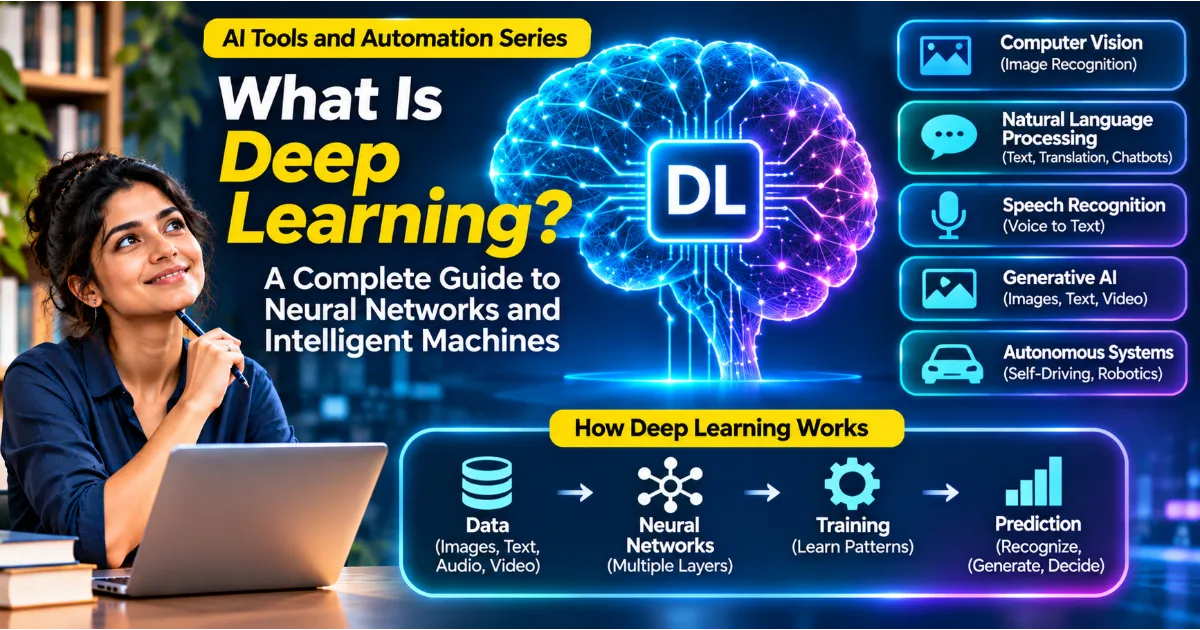
Deep Learning is a specialised area within machine learning that uses neural networks with multiple processing layers. It is especially important in modern image recognition, speech processing, natural language processing, and generative AI.
The relationship can be understood through a simple example. An AI-powered application may help a business identify customers who are likely to stop using a subscription service. Machine learning can analyse customer history and identify patterns associated with cancellations. Deep learning might be used if the application needs to process complex information such as customer messages or other unstructured data.
These technologies can work together, but they are not interchangeable terms.
Why Was Machine Learning Developed?
Traditional software works very well when a problem can be expressed through clear instructions. For example, a calculator can add two numbers using predefined mathematical operations. A payroll application can calculate salaries using established rules and employee information.
However, many real-world problems are difficult to solve through fixed instructions.
Recognising a face, understanding spoken language, predicting customer behaviour, identifying fraudulent transactions, and translating between languages involve patterns that can be complicated and constantly changing.
It would be difficult for developers to write a complete set of rules covering every possible variation.
Machine learning provides an alternative. Instead of describing every possible situation manually, developers can provide examples and allow algorithms to identify useful relationships.
This approach has become increasingly practical because organisations generate large amounts of digital information, computing resources have improved, and researchers have developed more effective learning algorithms.
Machine learning is now used across industries because it can identify patterns that may be difficult for people to discover manually.
How Does Machine Learning Work?
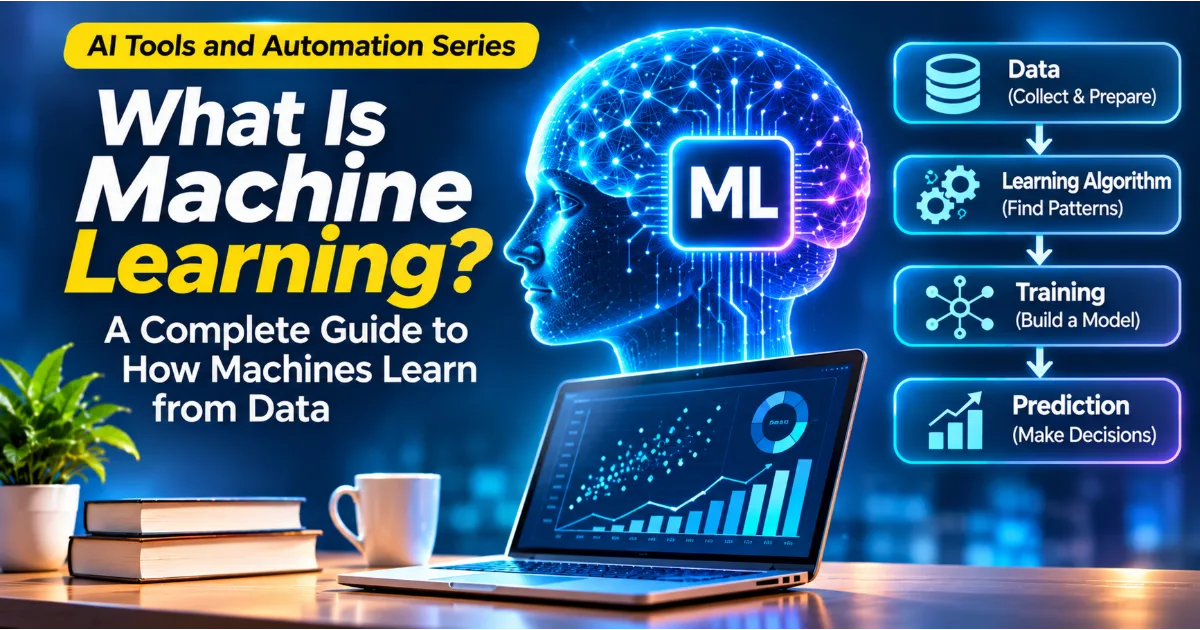
A machine learning system generally follows a series of stages. Although the exact process varies depending on the application, the basic workflow includes problem definition, data collection, data preparation, model selection, training, evaluation, deployment, and monitoring.
1. Define the Problem
The first step is understanding what the system should achieve.
A business may want to predict future sales, detect fraudulent transactions, identify customers likely to cancel subscriptions, or recommend products.
The problem must be clearly defined because the choice of data, algorithm, and evaluation method depends on the expected result.
For example, predicting the price of a property is a numerical prediction problem. Determining whether an email is spam is a classification problem. Grouping customers according to purchasing behaviour is a clustering problem.
A poorly defined problem can lead to a technically successful model that does not solve the actual business requirement.
2. Collect Relevant Data
Machine learning requires data that is relevant to the problem being addressed.
For a property price prediction model, developers may collect information about property location, size, number of rooms, building age, nearby facilities, and historical sale prices.
For a customer churn prediction model, the data might include subscription duration, usage frequency, payment history, support interactions, and previous cancellations.
Data may come from databases, application logs, business systems, sensors, surveys, public datasets, and other authorised sources.
The quantity and quality of information can strongly influence the model's performance. However, collecting more data does not automatically produce a better model. The information must be relevant, representative, and suitable for the intended task.
3. Prepare the Data
Raw data is rarely ready for direct use. It may contain missing values, duplicate records, inconsistent formats, incorrect entries, and irrelevant information.
Data preparation involves identifying and addressing these problems.
For example, a customer database may contain multiple records for the same person. A sales dataset may include missing transaction values. A property dataset may use different measurement units for similar features.
Developers may remove duplicates, correct formatting, handle missing values, and transform information into a suitable structure.
They may also convert categories into numerical representations because many machine learning algorithms operate on mathematical values.
Data preparation is one of the most important stages of machine learning. A sophisticated algorithm cannot reliably compensate for severely inaccurate or unsuitable data.
4. Select a Machine Learning Algorithm
After preparing the data, developers select an algorithm appropriate for the task.
A classification problem may require a decision tree, logistic regression, support vector machine, or another classification method.
A numerical prediction problem may use linear regression, random forests, gradient boosting, or neural networks.
A customer segmentation problem may use clustering algorithms such as K-means.
The selection depends on several factors, including the type of data, the complexity of the problem, required accuracy, available computing resources, and the importance of explaining the model's decisions.
There is no single algorithm that performs best for every problem.
5. Train the Model
Training is the process through which the algorithm learns patterns from the available training data.
The model initially has parameters that determine how it processes information. During training, it makes predictions and compares them with expected outcomes when labelled examples are available.
A mathematical function measures the prediction error. The learning process then adjusts the model's parameters to reduce that error.
This process is repeated across many examples and training iterations.
For example, a model predicting house prices may initially produce inaccurate estimates. As it processes historical examples, it adjusts its internal parameters to better represent relationships between property characteristics and selling prices.
The objective is to learn useful patterns that can also work on information the model has not previously encountered.
6. Evaluate the Model
After training, developers must evaluate whether the model performs well enough for its intended purpose.
A model that performs accurately on training data may still fail when it receives new information. Therefore, evaluation should use data that was not used to train the model.
Different problems require different performance measures.
A classification model may be evaluated using accuracy, precision, recall, and F1 score. A numerical prediction model may be evaluated using mean absolute error or root mean squared error.
Evaluation also involves examining failure cases, checking whether performance differs across relevant groups, and identifying possible sources of bias.
7. Deploy the Model
When a model meets the required standards, it can be deployed into a real application or business process.
For example, an online retailer may integrate a recommendation model into its website. A bank may use a fraud detection model to flag suspicious transactions. A manufacturing company may integrate an image recognition model into its quality inspection process.
Deployment makes the model available to process new information and provide predictions.
8. Monitor and Improve the Model
Machine learning does not end when a model is deployed.
Real-world conditions change. Customer behaviour evolves, market trends shift, products change, and new types of fraud emerge.
A model that performed well several months ago may gradually become less effective.
Monitoring helps developers identify performance changes, unexpected predictions, data quality issues, and operational problems.
When necessary, the model can be retrained using suitable new data or replaced with an improved version.
The Three Main Types of Machine Learning
Machine learning is commonly divided into three major categories: supervised learning, unsupervised learning, and reinforcement learning.
Each category uses a different learning approach and is suitable for different types of problems.
1. Supervised Learning
Supervised learning is a machine learning approach in which the model learns from labelled data.
A labelled dataset contains examples with both input information and the expected output. The algorithm examines these examples and learns relationships between the inputs and the corresponding answers.
Imagine teaching a computer to identify photographs of cats and dogs. Developers provide many images, each labelled as either a cat or a dog. The algorithm analyses visual patterns and learns which features are associated with each category.
After training, the model can examine a new photograph and estimate whether it contains a cat or a dog.
How Supervised Learning Works
The process begins with a labelled dataset. Developers identify the input features and the expected output.
The dataset is divided into training, validation, and testing portions when appropriate. The training data teaches the model. Validation data helps developers compare model configurations and adjust settings. Testing data evaluates performance on examples that were not used during training or model selection.
The algorithm learns patterns from the training examples and produces a model. Developers then assess whether the model can make reliable predictions on new data.
Classification in Supervised Learning
Classification is used when the expected output belongs to a category.
Examples include identifying spam emails, recognising animals in photographs, detecting suspicious transactions, and categorising customer feedback.
A classification model may produce a predicted category or a probability associated with each possible category.
For example, a message filtering system might estimate the probability that an email belongs to the spam category. The application can use an appropriate decision threshold to determine how the message should be handled.
Regression in Supervised Learning
Regression is used when the output is a numerical value.
Examples include predicting property prices, estimating monthly sales, forecasting electricity consumption, and predicting delivery times.
A regression model learns relationships between input variables and numerical outcomes.
For example, a property price model may examine the location, size, number of rooms, and age of a house to estimate its likely selling price.
Advantages of Supervised Learning
Supervised learning is useful when reliable labelled examples are available. Its performance can be evaluated by comparing predictions with known outcomes.
It is widely used in business forecasting, risk assessment, classification, fraud detection, image recognition, and many other applications.
Limitations of Supervised Learning
The main challenge is the need for labelled data. Creating accurate labels may require significant time, effort, and specialist knowledge.
A model may also learn biases or errors present in the training examples. If the data does not represent real-world conditions, the model may perform poorly after deployment.
2. Unsupervised Learning
Unsupervised learning is a machine learning approach that works with data without predefined output labels.
Instead of being given the correct answer for every example, the algorithm searches for patterns, similarities, relationships, or hidden structures within the information.
Consider a retailer that has thousands of customer records but does not know how to divide customers into useful groups. An unsupervised learning algorithm can analyse purchasing behaviour and identify groups of customers with similar characteristics.
One group may frequently purchase household essentials. Another may prefer premium products. A third may make purchases mainly during seasonal promotions.
These patterns can help the retailer understand customer behaviour and plan more relevant marketing activities.
Clustering
Clustering is one of the most common unsupervised learning techniques.
It groups similar data points together based on selected characteristics.
K-means is a popular clustering algorithm. It attempts to divide data into a specified number of clusters by assigning each observation to a group based on its distance from the cluster's centre.
For example, a business may use K-means to group customers according to purchasing frequency and average spending.
The resulting clusters can help identify different customer segments.
Association Rule Learning
Association rule learning identifies relationships between items that frequently occur together.
A supermarket may analyse transaction records to discover that customers who purchase certain products often purchase other products as well.
These patterns can support product placement, recommendation systems, and inventory planning.
However, an association between items does not necessarily mean that one item causes the purchase of another. The results should be interpreted carefully.
Dimensionality Reduction
Dimensionality reduction techniques simplify datasets by reducing the number of variables while attempting to preserve important information.
A dataset may contain hundreds of features. Some may be highly correlated, irrelevant, or redundant.
Techniques such as Principal Component Analysis can transform the information into a smaller number of dimensions that retain important variation.
This can support data exploration, visualisation, and certain machine learning workflows.
Advantages of Unsupervised Learning
Unsupervised learning can discover patterns that developers may not have anticipated. It is useful when labelled data is unavailable or expensive to create.
Businesses can use it to explore customer behaviour, identify unusual activities, and discover groups within large datasets.
Limitations of Unsupervised Learning
Evaluating unsupervised models can be difficult because there may be no predefined correct answer.
The clusters or patterns identified by an algorithm may not always be meaningful from a business or practical perspective.
Human interpretation is often needed to determine whether the discovered relationships are useful.
3. Reinforcement Learning
Reinforcement learning is a machine learning approach in which an agent learns through interaction with an environment.
The agent takes actions, observes the consequences, and receives feedback in the form of rewards or penalties. It uses this feedback to improve its future decisions.
A familiar example is a computer learning to play a game.
At the beginning, the system may make poor decisions. It receives feedback based on the results of its actions. Over many attempts, it can learn strategies that produce higher rewards.
Important Elements of Reinforcement Learning
An agent is the system that makes decisions and takes actions.
The environment is the situation or system in which the agent operates.
An action is a choice made by the agent.
A state represents the information available about the current situation.
A reward is feedback that indicates how useful an action or outcome was according to the defined objective.
A policy is the strategy the agent uses to select actions based on the available state information.
The objective is generally to learn a policy that produces a high cumulative reward over time.
Exploration and Exploitation
Reinforcement learning involves an important balance between exploration and exploitation.
Exploration means trying different actions to discover potentially better strategies.
Exploitation means choosing actions that are already known to produce useful results.
If an agent only exploits its current knowledge, it may miss better strategies. If it explores constantly, it may fail to use what it has already learned effectively.
Finding an appropriate balance is an important part of reinforcement learning.
Applications of Reinforcement Learning
Reinforcement learning has been used in game-playing systems, robotics research, resource allocation, and optimisation problems.
A robotic system may learn how to move an object by trying different actions and observing the results.
A traffic management system may explore ways to adjust signal timing to improve traffic flow, subject to safety and operational constraints.
Reinforcement learning can be useful when actions influence future states and decisions must be made over time.
Limitations of Reinforcement Learning
Training can require many interactions with an environment. This may be expensive or impractical in real-world situations.
A poorly designed reward function can encourage undesirable behaviour. A system may find a way to maximise the reward without achieving the intended objective.
Safety is especially important when reinforcement learning is applied to physical systems, financial processes, or other environments where incorrect actions can have serious consequences.
4. Semi-Supervised Learning
Semi-supervised learning combines labelled and unlabelled data.
In many real-world situations, organisations have large collections of information but only a small portion has been labelled by humans.
For example, a company may have thousands of product photographs but only a few hundred have been classified into categories by a human reviewer.
Semi-supervised learning can use the labelled examples together with suitable unlabelled data to improve model training.
This approach can reduce the amount of manual labelling required while still benefiting from human-provided examples.
It is useful in situations where collecting raw data is relatively easy but preparing accurate labels is expensive.
However, its effectiveness depends on the relationship between labelled and unlabelled data. Poor assumptions about that relationship can lead to unreliable results.
5. Self-Supervised Learning
Self-supervised learning is an approach in which a model creates learning signals from the structure of the available data.
Instead of relying entirely on human-provided labels, the training process defines tasks that allow the model to learn useful representations.
For example, a language model may learn by predicting missing or subsequent tokens in text. By processing many examples, it develops representations of language patterns and relationships.
Self-supervised learning has played a major role in the development of modern language models and other large-scale AI systems.
It is particularly useful when large amounts of raw data are available but manually labelling every example would be impractical.
Self-supervised learning is not the same as unsupervised learning in every technical definition, although both can work without conventional human-provided labels.
Popular Machine Learning Algorithms
Machine learning includes many algorithms, each designed for particular types of problems. Understanding a few commonly used methods provides a useful foundation.
Linear Regression
Linear regression is used to estimate numerical values by modelling relationships between input variables and an output.
For example, a business may use historical advertising expenditure and sales figures to estimate how sales change in relation to advertising activity.
The model attempts to identify a mathematical relationship that best represents the available observations.
Linear regression is relatively easy to interpret, making it a useful starting point for understanding predictive modelling.
However, its basic form may not capture complicated relationships in data.
Logistic Regression
Despite its name, logistic regression is commonly used for classification rather than ordinary numerical regression.
It estimates the probability of an observation belonging to a particular category.
For example, a subscription business may use logistic regression to estimate whether a customer is likely to cancel a service.
The resulting probability can support a decision based on an appropriate threshold.
Decision Trees
Decision trees make predictions through a sequence of conditions.
Imagine a simple customer eligibility model that considers income, repayment history, and outstanding debt. The system follows branches based on the available values until it reaches a predicted outcome.
Decision trees are relatively easy to explain because their decisions can be represented as a series of questions.
However, an individual decision tree may become too complex or overfit the training data.
Random Forests
Random forests combine multiple decision trees to produce a prediction.
Each tree learns from a sample of the available data, and their outputs are combined through a voting or averaging process depending on the task.
This approach often produces more stable predictions than relying on a single decision tree.
Random forests are used in classification, regression, risk analysis, and other predictive tasks.
Support Vector Machines
Support Vector Machines, or SVMs, are algorithms used primarily for classification and also for regression.
An SVM attempts to identify a boundary that separates different categories in a feature space.
It can use mathematical transformations to handle certain relationships that are not easily separated through a simple straight boundary.
SVMs have been used in image classification, text classification, and other machine learning applications.
K-Nearest Neighbours
K-Nearest Neighbours, commonly called KNN, makes predictions by examining nearby examples in the dataset.
For a classification task, the algorithm may identify the nearest examples and assign the new observation to the category most common among those neighbours.
For example, a system might classify a new product according to the characteristics of similar products already in the dataset.
KNN is relatively intuitive but can become computationally expensive when datasets are very large.
K-Means Clustering
K-means is an unsupervised learning algorithm that groups observations into a selected number of clusters.
It is frequently used for customer segmentation and exploratory data analysis.
The algorithm repeatedly assigns observations to clusters and updates cluster centres until a stopping condition is reached.
Its results depend partly on the selected number of clusters and the characteristics of the data.
Neural Networks
Neural networks are computational models made up of connected mathematical units arranged in layers.
They can learn complex patterns and are widely used in image recognition, language processing, speech recognition, and other tasks.
Deep learning systems use neural networks with multiple processing layers.
Although powerful, neural networks can require substantial computing resources and may be difficult to interpret compared with simpler models.
What Is Training Data, Validation Data, and Testing Data?
One of the most important concepts in machine learning is the separation of data into different portions for development and evaluation.
Training data is used to teach the model. The algorithm examines these examples and adjusts its parameters to learn useful patterns.
Validation data is used during development to compare model configurations, adjust hyperparameters, and identify problems such as overfitting.
Testing data is reserved for final evaluation. It helps developers estimate how well the trained model performs on information that was not used during model development.
Imagine building a model that predicts student examination results.
The training dataset contains historical student information and examination outcomes. The model learns relationships between the available features and results.
The validation dataset helps developers compare different model settings.
The testing dataset provides an independent evaluation of the final model.
This separation is important because repeatedly adjusting a model based on the testing data can make the final evaluation misleading.
In real-world applications, developers must also consider whether the data distribution reflects the conditions in which the model will eventually operate.
Understanding Overfitting and Underfitting
A machine learning model should learn useful patterns without becoming too closely fitted to the training examples.
Overfitting occurs when a model learns the training data too specifically, including noise and accidental patterns that do not generalise well.
Imagine a student who memorises the answers to a practice test without understanding the subject. The student may perform well when the same questions appear again but struggle with unfamiliar questions.
An overfitted model behaves similarly. It may achieve excellent training performance but produce poor predictions on new information.
Developers can reduce overfitting through techniques such as regularisation, cross-validation, appropriate model complexity, and suitable training data.
Underfitting occurs when a model is too simple or has not learned enough to represent the important patterns in the data.
A student who studies only a small part of a subject may struggle with both familiar and unfamiliar questions. An underfitted model may also perform poorly on the training data itself.
The goal is to develop a model that captures meaningful relationships and performs reliably on new examples.
What Is Feature Engineering?
Feature engineering is the process of selecting, creating, transforming, or organising input variables to help a machine learning model learn useful patterns.
A feature is an individual piece of information used by a model.
For a property price prediction system, features might include location, floor area, number of bedrooms, building age, and distance from public transport.
Developers may create additional features from existing information. For example, the age of a property can be calculated from its construction year. A transaction date can be transformed into information about the month, season, or day of the week.
Good feature engineering can improve model performance because it helps represent the problem in a way that the algorithm can use effectively.
However, feature engineering must be performed carefully. Features that contain information unavailable at the time of prediction can create data leakage and make evaluation results misleading.
How Machine Learning Is Used in Real Life
Machine learning has moved beyond research laboratories and is now integrated into everyday applications and business operations.
Banking and Financial Services
Banks and financial institutions use machine learning to analyse transactions, identify unusual behaviour, support risk assessment, and detect potential fraud.
A fraud detection model may examine transaction amounts, locations, timing, account history, and other relevant information.
When a transaction differs significantly from expected patterns, the system may flag it for additional verification.
Machine learning can support financial decisions, but its predictions must be evaluated carefully because incorrect results can affect customers and businesses.
Healthcare
Machine learning is used in certain healthcare applications involving medical image analysis, risk prediction, research, and administrative processes.
A specialised model may analyse medical images and identify patterns that deserve attention from a qualified professional.
Researchers may use machine learning to examine large datasets and investigate relationships between different variables.
Clinical applications require rigorous testing, appropriate validation, privacy safeguards, and professional oversight. A model's prediction should not be treated as a replacement for qualified medical judgement.
Education
Educational platforms can use machine learning to recommend learning materials, analyse student progress, and identify topics where additional practice may be useful.
For example, a learning application may examine a student's answers and identify repeated mistakes involving a particular mathematical concept.
The platform can then recommend exercises related to that topic.
These systems can support personalised learning, but educators should remain involved in evaluating progress and addressing individual learning needs.
E-Commerce and Retail
Online stores use machine learning to recommend products, estimate demand, analyse customer behaviour, and improve inventory planning.
A recommendation engine may identify products that customers with similar purchasing patterns have viewed or purchased.
A demand forecasting model may analyse historical sales, seasonal patterns, promotions, and other variables to estimate future product requirements.
These applications can help businesses improve customer experience and manage resources more effectively.
Transportation and Logistics
Transportation organisations use machine learning for traffic prediction, route planning, demand forecasting, and certain vehicle-related applications.
A logistics company may estimate delivery times using historical journey information, road conditions, and operational data.
A navigation application may analyse recent traffic observations to recommend routes that are expected to be faster.
The quality of these predictions depends on the accuracy and timeliness of available information.
Agriculture
Machine learning can support crop monitoring, yield estimation, irrigation planning, and the identification of certain plant diseases.
A system may analyse photographs from agricultural fields and identify visual patterns associated with possible crop problems.
Farmers can use relevant information to decide where further inspection or treatment may be needed.
These applications can support agricultural productivity, particularly when combined with local knowledge and appropriate field observations.
Manufacturing
Manufacturing companies use machine learning to support quality inspection, equipment monitoring, and predictive maintenance.
A predictive maintenance system may analyse sensor readings such as temperature, vibration, and operating pressure.
It can identify patterns associated with equipment problems and help maintenance teams investigate before a failure occurs.
The objective is to reduce unexpected downtime and improve operational planning.
Cybersecurity
Machine learning can help cybersecurity teams identify unusual network activity, suspicious login behaviour, malware patterns, and potential security incidents.
Attackers continually change their methods, so systems that can learn patterns from new information may provide useful additional support.
However, machine learning is only one part of cybersecurity. Strong access controls, software updates, monitoring, security testing, and incident response remain essential.
Machine Learning and Deep Learning: What Is the Difference?
Machine Learning is a broad field that includes many algorithms and learning methods.
Deep Learning is a specialised area of machine learning that uses neural networks with multiple processing layers.
Traditional machine learning methods may require developers to select and prepare important features manually.
Deep learning systems can often learn useful representations directly from large collections of raw information, particularly when processing images, audio, and text.
For example, a traditional machine learning image classifier may depend on manually designed image features. A deep learning model can learn visual features through its training process.
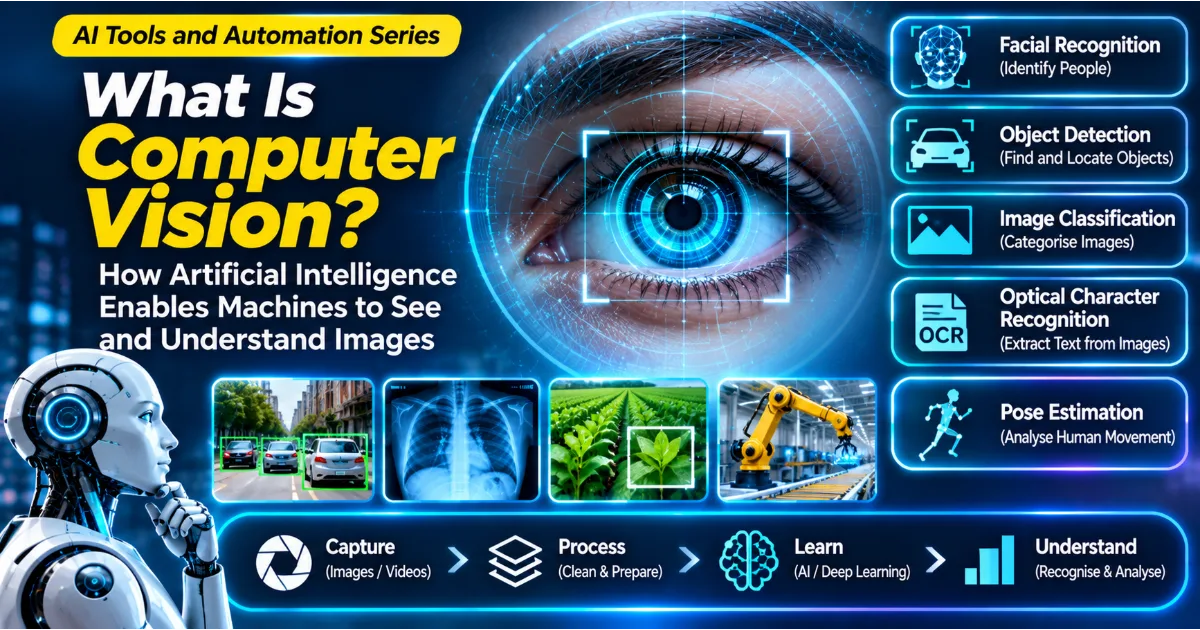
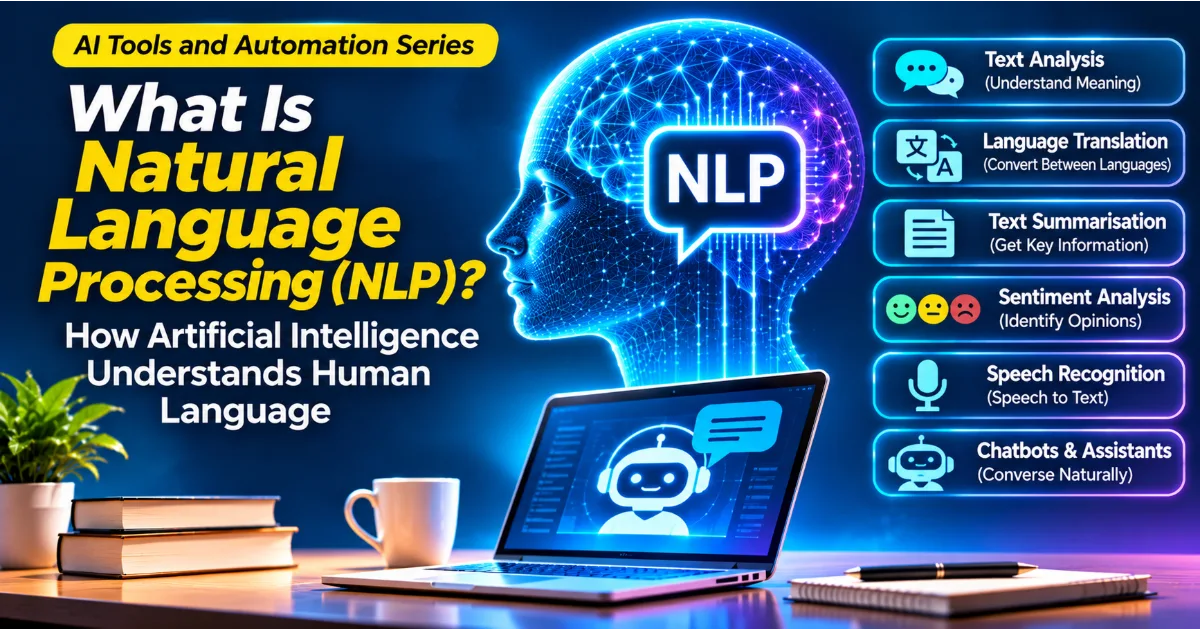
Deep learning has enabled significant progress in computer vision, speech recognition, natural language processing, and generative AI.
However, deep learning is not automatically better for every task. Simpler machine learning algorithms may be more suitable when datasets are small, interpretability is important, or computing resources are limited.
Machine Learning and Generative AI
Generative AI is closely related to machine learning because generative systems are commonly built using machine learning and deep learning techniques.
Traditional predictive machine learning often focuses on estimating a category or numerical value.
For example, a model may predict whether a customer is likely to cancel a subscription.
Generative AI focuses on producing new content, such as text, images, audio, or code.
A language model may generate a product description, explain a technical concept, or prepare a draft email based on a prompt.
An image generation model may create a visual representation of a written description.
Both predictive and generative approaches learn patterns from data, but they are designed to produce different types of outputs.
Advantages of Machine Learning
Machine learning offers several benefits when applied to suitable problems.
One important advantage is its ability to analyse large amounts of information. A machine learning model can process datasets containing millions of observations and identify patterns that would be difficult to examine manually.
Another advantage is automation. Once a model has been developed and deployed, it can process new information and produce predictions without requiring a person to perform every calculation.
Machine learning can also improve consistency. A well-designed model applies the same computational process to each input, although the quality of its output still depends on the data and model design.
It can support personalised experiences. Recommendation systems can suggest products, learning platforms can recommend educational materials, and digital services can adapt certain features to user behaviour.
Machine learning may also help organisations identify unusual patterns and detect potential problems earlier.
In research and business analysis, it can help people explore complex datasets and investigate relationships between variables.
Limitations and Challenges of Machine Learning
Despite its advantages, machine learning has important limitations.
Dependence on Data Quality
Machine learning models learn from the information provided during training. If the data is inaccurate, incomplete, biased, or unrepresentative, the model may produce unreliable results.
Bias and Fairness
A model may reproduce patterns that exist in its training data. If historical information contains unfair decisions, the model may learn relationships that create discriminatory outcomes.
Developers must evaluate models for fairness and consider the consequences of their predictions.
Lack of Explainability
Some complex models are difficult to interpret. It may be challenging to understand exactly why a particular prediction was produced.
This is especially important in areas such as finance, healthcare, employment, and public services, where people may need explanations for decisions that affect them.
Changing Real-World Conditions
A model trained on historical information may become less effective when conditions change.
For example, consumer behaviour may shift, new types of fraud may emerge, or market conditions may change significantly.
Continuous monitoring is therefore necessary.
Computing and Development Costs
Some machine learning applications require powerful hardware, specialised expertise, large datasets, and ongoing maintenance.
Deep learning models can be particularly expensive to train and operate at scale.
Privacy and Security
Machine learning projects may involve sensitive personal or business information. Organisations must manage data access, storage, security, and legal responsibilities carefully.
Incorrect Predictions
Machine learning produces predictions based on learned patterns. It does not guarantee that every prediction will be correct.
People should avoid treating model outputs as unquestionable facts, especially when important decisions are involved.
What Is the Role of Human Intelligence in Machine Learning?
Machine learning systems can analyse information quickly, but people remain essential throughout the development and deployment process.
Humans define the problem, determine what data is appropriate, select evaluation criteria, and decide how the system should be used.
Data scientists and engineers prepare datasets, build models, evaluate performance, and investigate errors.
Business professionals interpret the results and decide whether the predictions are useful for real operations.
Domain experts help identify situations where an apparently accurate prediction may be misleading or inappropriate.
For example, a model may identify customers who are likely to cancel a subscription. However, a business must decide how to respond. It may improve customer support, investigate pricing concerns, or offer more suitable services.
The prediction alone does not determine the correct business decision.
Human judgement is also important when models operate in sensitive environments. People must remain accountable for the consequences of decisions made with machine learning assistance.
How to Start Learning Machine Learning
Machine learning can seem difficult at first because it involves mathematics, programming, statistics, and data analysis. However, beginners can develop their understanding gradually.
Start with the Basic Concepts
Begin by understanding Artificial Intelligence, Machine Learning, Deep Learning, training data, features, algorithms, and model evaluation.
Learn the differences between supervised, unsupervised, and reinforcement learning.
Understanding these concepts provides a foundation before moving into programming.
Learn Python Programming
Python is widely used in machine learning because it has a large ecosystem of libraries and tools.
Beginners should learn variables, data types, conditions, loops, functions, lists, dictionaries, and basic file handling.
After understanding the fundamentals, they can explore libraries used for data processing and machine learning.
Understand Basic Mathematics and Statistics
You do not need to master advanced mathematics before experimenting with machine learning, but some mathematical knowledge is helpful.
Important topics include averages, percentages, probability, distributions, correlation, algebra, and basic linear algebra.
Understanding these topics makes it easier to interpret model behaviour and evaluate predictions.
Learn Data Analysis
Machine learning depends on data, so beginners should learn how to read, clean, transform, and explore datasets.
Python libraries such as Pandas and NumPy are commonly used for data manipulation and numerical operations.
Matplotlib can be used to visualise data and identify patterns.
Explore Scikit-Learn
Scikit-learn is a popular Python library for traditional machine learning.
It provides tools for classification, regression, clustering, preprocessing, model selection, and evaluation.
Beginners can use it to build practical models without having to implement every algorithm from scratch.
Explore Deep Learning Later
Once you understand basic machine learning, you can explore deep learning frameworks such as PyTorch and TensorFlow.
These frameworks support the development and training of neural networks.
You can begin with small projects involving image classification, text processing, or numerical prediction.
Build Practical Projects
Practical projects help turn theoretical knowledge into useful experience.
You might build a spam email classifier, a house price prediction model, a customer segmentation system, or a simple product recommendation engine.
Start with a small dataset and a clearly defined objective. Evaluate the results and document what worked, what failed, and what you learned.
A Beginner-Friendly Machine Learning Project
Imagine building a simple system that predicts whether a customer is likely to purchase a product.
The project begins with historical customer information. The dataset may contain product views, previous purchases, time spent on the website, and whether the customer eventually completed a purchase.
The target variable is the purchase outcome. The remaining relevant information becomes the input features.
Developers clean the dataset, remove duplicate records, handle missing information, and divide the data into training and testing portions.
A classification algorithm is then trained using the training data.
After training, the model processes the testing examples and produces predictions.
Developers evaluate the results using appropriate classification measures. They may compare different algorithms and examine which types of customers the model predicts incorrectly.
If the model performs well enough, it could be integrated into a suitable business application.
This project demonstrates the complete machine learning workflow, from problem definition to evaluation.
It also highlights an important principle: a model is only useful when its predictions help solve a real problem.
The Future of Machine Learning
Machine learning continues to develop as researchers improve algorithms, hardware, training methods, and ways of integrating models into software applications.
One important direction is the development of more efficient models. Smaller models may be capable of performing specialised tasks with fewer computing resources, making AI applications easier to deploy on local devices.
Another area is multimodal machine learning. Systems are increasingly being designed to process combinations of text, images, audio, video, and other information.
Machine learning is also becoming more closely connected with automation. Businesses are exploring systems that can use model predictions to support multi-step workflows.
Explainable AI is another important research area. As machine learning is used in consequential decisions, organisations need better ways to understand and communicate how models produce their results.
Privacy-preserving approaches are also receiving attention. Techniques such as federated learning aim to support model training across distributed data sources while reducing the need to centralise raw information, although they do not automatically eliminate every privacy risk.
Responsible machine learning will become increasingly important. Future development must consider fairness, reliability, security, transparency, environmental costs, and human accountability.
The long-term value of machine learning will depend not only on more powerful algorithms but also on how effectively these systems address real problems.
Conclusion: Machine Learning Is the Foundation of Many Intelligent Applications
Machine Learning enables computers to learn patterns from data and use those patterns to make predictions, classifications, recommendations, and decisions.
It is a major branch of Artificial Intelligence and supports many of the applications people use every day. From spam detection and product recommendations to fraud analysis, image recognition, forecasting, and generative AI, machine learning has become an important part of modern digital technology.
Its main learning approaches include supervised learning, unsupervised learning, and reinforcement learning. Other approaches, such as semi-supervised and self-supervised learning, help systems learn from different forms of available information.
Building a useful machine learning system requires much more than selecting an algorithm. Developers must define the problem, collect and prepare appropriate data, train the model, evaluate its performance, deploy it responsibly, and monitor its behaviour over time.
Machine learning also has limitations. It can inherit bias, produce inaccurate predictions, and struggle when real-world conditions change. Human judgement, domain knowledge, and responsible oversight remain essential.
For beginners, the best way to understand machine learning is to combine fundamental concepts with practical experimentation. Learning Python, exploring datasets, building simple models, and evaluating their results can provide a strong starting point.
Machine Learning is not simply about teaching computers to calculate faster. It is about enabling systems to discover patterns from experience and use those patterns to support useful decisions. Understanding this technology is an important step towards understanding the wider world of Artificial Intelligence.
Continue the Discussion
Have you used a machine learning application without realising that machine learning was working behind the scenes?
Which application interests you most: fraud detection, product recommendations, image recognition, customer prediction, or automated forecasting?
Share your experience and questions. Your responses can help identify the practical machine learning topics worth exploring in greater detail.
#MachineLearning #ArtificialIntelligence #DataScience #DeepLearning #AITools