Artificial intelligence is becoming an important part of modern life. People use AI-powered applications to write documents, search for information, learn new subjects, generate images, analyse business data, develop software, and automate repetitive activities. Businesses use intelligent systems to improve customer service, support recruitment, detect unusual transactions, and manage complex operations. Governments and institutions are also exploring AI for public services, research, transportation, and administration.
As these technologies become more powerful, an important question arises: how should artificial intelligence be developed and used responsibly?
An AI system may be technically impressive but still create problems if it uses personal information without appropriate permission, produces discriminatory recommendations, spreads inaccurate information, or makes important decisions without sufficient human oversight.
Imagine a company using an AI-powered recruitment system to evaluate job applications. The system may process thousands of applications quickly, but what happens if it consistently disadvantages candidates from certain educational backgrounds because of patterns in its training data? The system may appear efficient while producing unfair outcomes.
Consider another example involving an AI assistant that answers questions about healthcare. If it generates an inaccurate medical explanation and presents it confidently, a user may make an unsafe decision.
Continue Reading
There are also concerns about privacy, surveillance, copyright, transparency, accountability, misinformation, and the impact of automation on employment.
These challenges demonstrate why artificial intelligence cannot be evaluated only by its speed, accuracy, or technical capabilities. We must also consider how it affects people, society, organizations, and the environment.
This is where AI ethics becomes important.
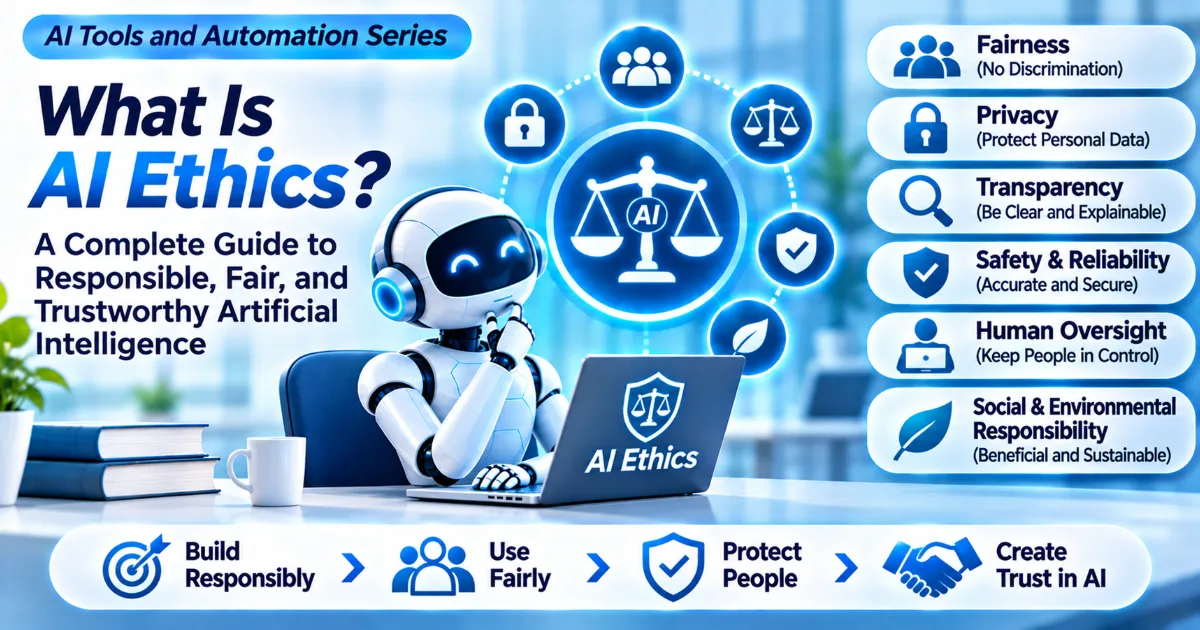
AI ethics provides principles and approaches for developing, deploying, and using artificial intelligence in ways that respect human rights, fairness, privacy, safety, transparency, and accountability.
Understanding AI ethics is essential for developers, business owners, policymakers, students, researchers, and everyday AI users. As artificial intelligence becomes increasingly integrated into decision-making and daily activities, responsible use will become just as important as technical innovation.
What Is AI Ethics?
AI ethics refers to the principles, values, and guidelines that help ensure artificial intelligence systems are developed and used responsibly.
It examines the moral, social, legal, and practical questions associated with AI technologies.
The central objective is to make sure that AI systems benefit people without creating unnecessary harm, discrimination, privacy violations, or unfair outcomes.
AI ethics covers several important areas, including:
Fairness and non-discrimination.
Privacy and protection of personal information.
Transparency and explainability.
Accountability for AI-generated decisions and actions.
Safety, security, and reliability.
Human control and oversight.
Responsible data collection and usage.
Accessibility and inclusion.
Environmental and social impact.
For example, if a bank uses AI to evaluate loan applications, ethical considerations include whether the system treats applicants fairly, whether its decisions can be explained, whether personal information is protected, and whether customers can challenge an incorrect decision.
Similarly, if a company uses generative AI to create marketing content, it should consider whether the content is misleading, whether copyrighted material is being used appropriately, and whether the generated information is accurate.
AI ethics is not about preventing artificial intelligence from developing. It is about guiding technological progress so that innovation remains aligned with human values and legitimate social interests.
Why Is AI Ethics Important?
Artificial intelligence can influence decisions that affect people's education, employment, finances, healthcare, access to services, and personal lives.
When an AI system makes a mistake in a low-risk activity, the consequences may be minor. When it influences a high-impact decision, the consequences can be significant.
AI ethics helps identify these risks before they become widespread.
1. Protecting Human Rights
AI systems can process information about individuals and influence how they are treated.
For example, facial recognition, automated monitoring, and data profiling may affect privacy and personal freedom.
Ethical AI development requires consideration of fundamental rights and appropriate limits on how technology is used.
2. Preventing Discrimination
AI systems learn patterns from data. If the data reflects historical inequalities or contains unrepresentative information, the model may reproduce or amplify those patterns.
An AI recruitment system trained on biased historical hiring data may favour certain candidate profiles even when other candidates have equally relevant qualifications.
Fairness needs to be considered throughout the development and deployment process.
3. Protecting Personal Information
Many AI applications process personal data, including names, contact details, financial information, photographs, recordings, and workplace documents.
Organizations must consider whether information is collected appropriately, how it is stored, who can access it, and whether it is shared with external AI services.
Privacy should be part of system design rather than an afterthought.
4. Improving Trust
People are more likely to use AI systems when they understand what those systems do, what information they use, and what their limitations are.
An organization that communicates clearly about AI usage can build greater confidence among employees, customers, and other stakeholders.
5. Establishing Accountability
When an AI system produces a harmful result, it should be possible to determine who is responsible for the system, how it was designed, what information it used, and how the problem can be corrected.
AI ethics encourages organizations to establish clear responsibilities instead of treating the technology as an independent decision-maker that cannot be questioned.
6. Supporting Long-Term Innovation
Responsible development can help reduce legal, operational, and reputational risks.
Organizations that consider safety, privacy, fairness, and transparency from the beginning may be better prepared to deploy AI systems sustainably.
Ethical safeguards are therefore not necessarily obstacles to innovation. They can help create more reliable and trustworthy technology.
The Core Principles of AI Ethics
AI ethics includes several interconnected principles. Different organizations and regulatory frameworks may define them differently, but a number of themes appear consistently.
1. Fairness and Non-Discrimination
Fairness is one of the most important principles of responsible AI.
An AI system should not unfairly disadvantage individuals or groups because of characteristics such as gender, age, disability, ethnicity, or other protected or sensitive attributes.
Consider an AI recruitment tool that ranks job applicants.
If the model is trained on historical hiring decisions from an organization where certain groups were underrepresented, it may learn patterns that reproduce the same imbalance.
The system may assign lower scores to candidates whose qualifications or career histories differ from those commonly found in its training data.
This can happen even when the model does not explicitly use a sensitive attribute. Other variables may act as indirect indicators.
For example, a geographical location or educational history may correlate with characteristics that the organization should not use unfairly.
Fairness requires more than removing sensitive fields from a dataset.
Organizations should examine how data was collected, how labels were created, which groups are represented, how the model performs across different populations, and whether the final decision-making process creates unjustified disadvantages.
Fairness also depends on context. A system used for entertainment recommendations may require different fairness considerations from one used for hiring, credit decisions, or public services.
2. Privacy and Data Protection
AI systems can process enormous amounts of information. Some of that information may be personal, confidential, or sensitive.
Privacy-focused AI development requires organizations to think carefully about what data is necessary and how it should be handled.
Imagine an employee copying an internal customer database into an external AI chatbot to generate a report.
If the organization has not approved that use, confidential information may be exposed through an inappropriate data-sharing process.
Responsible AI practices should include:
Collecting only the information necessary for a legitimate purpose.
Explaining how personal information will be used.
Applying appropriate access controls.
Protecting data during storage and transmission.
Establishing suitable retention and deletion practices.
Reviewing third-party AI services and their data policies.
Following applicable privacy and data protection laws.
Privacy also matters when AI systems process photographs, voice recordings, location information, or workplace communications.
For developers, privacy should be considered during architecture and product design. It should not be postponed until after an AI application has already been deployed.
3. Transparency
Transparency means providing appropriate information about how an AI system is being used and what people should understand about its operation.
For example, a company using an AI chatbot for customer support should make it reasonably clear that customers are interacting with an automated system.
A financial service using AI to support credit decisions should provide appropriate information about the process and relevant decision rights.
Transparency does not necessarily mean publishing every line of source code or revealing sensitive security information. It means communicating relevant facts in a way that users and affected individuals can understand.
Organizations should consider explaining:
Where AI is being used.
What the system is designed to do.
What types of information it processes.
Whether outputs are reviewed by humans.
What limitations are known.
How people can question or appeal important decisions.
Clear communication helps prevent people from assuming that an AI-generated answer has been independently verified or approved by a human expert.
4. Explainability
Explainability is related to transparency but focuses more specifically on understanding why an AI system produced a particular result.
Some AI models are complex and do not provide simple explanations of their internal processes.
However, organizations can often provide useful information about the factors, inputs, rules, or evidence that contributed to an outcome.
For example, if an AI-supported loan assessment results in a rejection, an applicant may need an understandable explanation of the relevant factors and an appropriate way to challenge inaccurate information.
Explainability is particularly important in high-impact applications.
A system that simply reports "Application rejected" without any meaningful explanation may make it difficult for people to identify mistakes or exercise their rights.
Explainability methods may include feature importance analysis, model documentation, decision logs, rule-based explanations, and human-readable summaries.
The appropriate method depends on the model and application.
5. Accountability
Accountability means that identifiable people and organizations remain responsible for the development, deployment, operation, and consequences of AI systems.
An organization should not be able to avoid responsibility simply by saying that an AI model made the decision.
For example, if a company deploys an AI system that repeatedly sends incorrect billing information to customers, the organization remains responsible for investigating and correcting the problem.
Accountability requires clear ownership.
Developers may be responsible for technical implementation, data teams for data quality, product managers for intended functionality, security teams for protection controls, and business leaders for deployment decisions.
However, responsibilities must be defined according to the actual organization and applicable requirements.
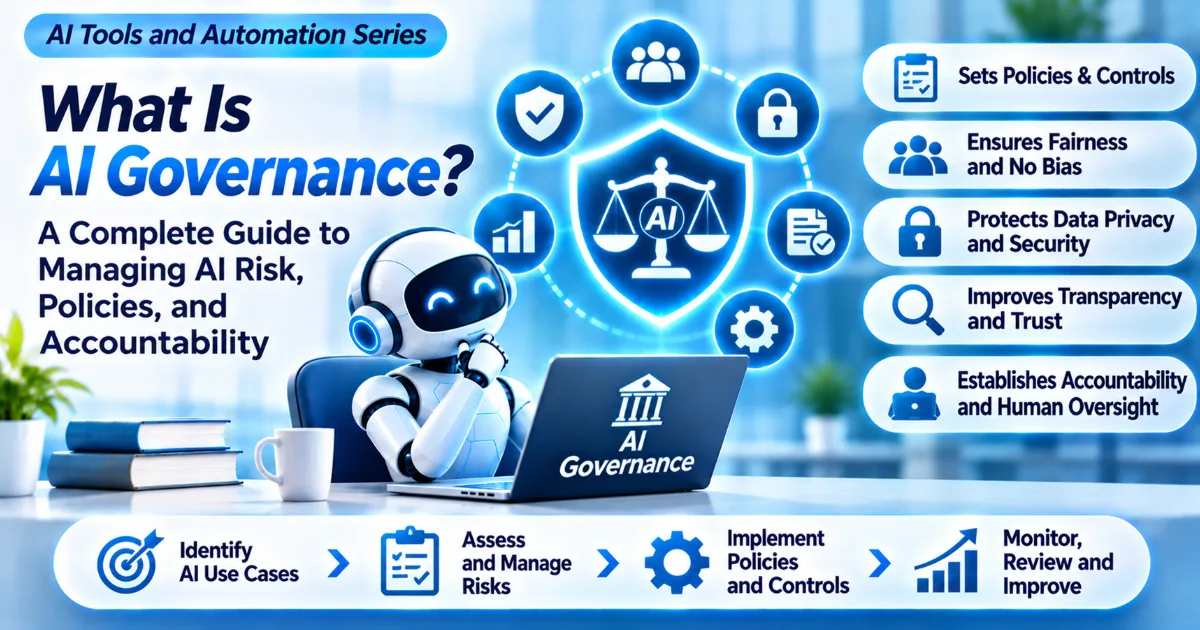
A responsible AI governance process should identify who approves a system, who monitors it, who handles complaints, and who can suspend it when serious problems occur.
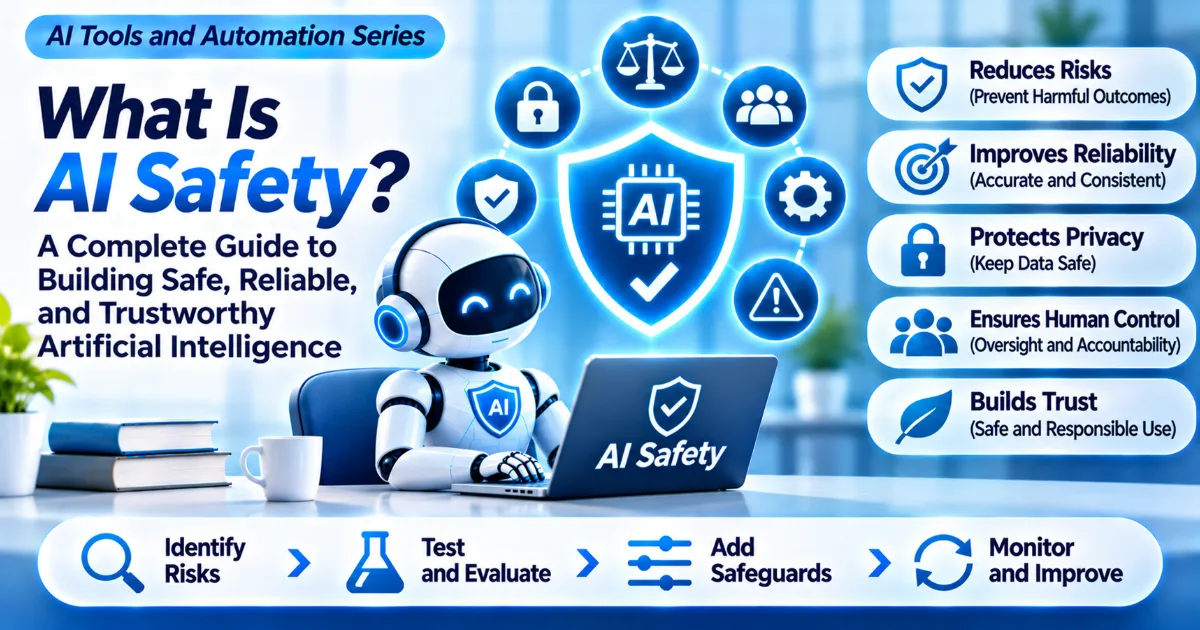
6. Safety and Reliability
AI systems should perform their intended tasks reliably and should not create unacceptable risks.
A system may work correctly under normal conditions but fail when it receives unusual, incomplete, or misleading input.
For example, an AI assistant connected to business applications may interpret an instruction incorrectly and attempt to update the wrong record.
Safety requires testing different situations before deployment and monitoring system performance after launch.
Organizations should consider:
Accuracy and consistency.
Error detection and recovery.
Security vulnerabilities.
Unusual or unexpected inputs.
Human approval for high-impact actions.
Monitoring and incident reporting.
Safe shutdown or fallback procedures.
Reliability should be evaluated continuously because AI models, data sources, user behaviour, and operating environments can change.
7. Human Oversight and Control
AI should support human decision-making without removing appropriate human responsibility.
Human oversight is especially important when AI systems influence consequential decisions or perform actions that are difficult to reverse.
For example, an AI recruitment tool may help organize applications and summarize qualifications. However, important hiring decisions should involve appropriate human review and applicable fairness safeguards.
Similarly, an AI assistant may draft a financial recommendation, but a qualified person should review the underlying information before the recommendation is acted upon.
Human oversight should be meaningful.
Simply placing a human approval button at the end of an automated process is not enough if the reviewer lacks sufficient information, time, authority, or ability to challenge the result.
People responsible for reviewing AI outputs need the necessary context and training.
8. Accessibility and Inclusion
AI technologies should be designed to benefit a wide range of people, including individuals with disabilities and people who may face barriers when accessing digital services.
For example, speech recognition and text-to-speech technologies can support people who have difficulty using traditional interfaces.
Image description systems can help make visual content more accessible.
However, AI systems may perform differently across languages, accents, speech patterns, devices, and accessibility needs.
Inclusive development requires testing with diverse users and considering accessibility throughout the product lifecycle.
9. Environmental Responsibility
AI systems require computing infrastructure, data centres, storage, and energy.
Large-scale model training and repeated inference can consume significant resources.
Organizations should consider the environmental impact of their AI applications, particularly when selecting models, designing workflows, and managing infrastructure.
Potential approaches include choosing appropriately sized models, avoiding unnecessary processing, optimizing workloads, and monitoring resource consumption.
Environmental responsibility also involves considering the lifecycle of computing hardware and the broader infrastructure required to operate AI services.
Common Ethical Challenges in Artificial Intelligence
Although the principles of AI ethics are relatively easy to understand, applying them in real-world systems can be complicated.
Several challenges deserve particular attention.
AI Bias
AI bias occurs when a system produces systematically unfair outcomes.
Bias can enter through historical data, incomplete representation, subjective labels, inappropriate features, or design decisions.
For example, a facial recognition system may perform differently across demographic groups if its training data does not adequately represent those groups.
An organization may also unintentionally introduce bias through the way it defines success.
If a model is trained to maximize a narrow performance measure without considering fairness, it may produce results that are technically consistent but socially harmful.
Preventing bias requires examining the entire process, not simply adjusting the model at the end.
Misinformation and Deepfakes
Generative AI can create realistic-looking text, images, audio, and videos.
This can be useful for creative work, education, and entertainment. However, it can also be misused to create misleading content.
Deepfakes are synthetic or manipulated media that may imitate a real person's appearance or voice.
They can be used to misrepresent events, impersonate individuals, spread misinformation, or damage reputations.
Responsible AI use requires careful attention to authenticity, consent, and the potential impact of synthetic media.
Users should verify important claims through reliable sources rather than assuming that realistic media is genuine.
Copyright and Intellectual Property
Generative AI raises questions about the use of copyrighted material in training data and the ownership or licensing of generated content.
For example, a business may use an image generation system to create marketing material. It should understand the platform's applicable terms and consider whether the generated content may raise copyright or trademark concerns.
Similarly, developers and organizations should review the licensing requirements associated with AI-generated code and third-party components.
Copyright law differs between jurisdictions and continues to evolve in response to AI technologies.
Businesses should seek appropriate legal advice when commercial use creates significant intellectual property risks.
Job Displacement and Workforce Changes
AI automation can change the way work is performed.
Some tasks may become automated, while others may require new skills involving AI supervision, data analysis, workflow design, and technology management.
The impact may differ across occupations and industries.
For example, AI may automate parts of document processing while increasing the demand for people who can evaluate complex cases, manage exceptions, and maintain reliable systems.
Organizations have an ethical responsibility to consider how automation affects employees.
This includes training, reskilling, transparent communication, and thoughtful workforce planning.
Surveillance and Loss of Privacy
AI-powered surveillance systems can process video, facial information, movement patterns, and other personal data.
Such technologies may be used for legitimate security purposes, but they can also create risks involving excessive monitoring, discrimination, and loss of privacy.
Organizations should establish clear purposes, lawful authority, access restrictions, retention periods, and oversight mechanisms.
The fact that a technology can identify or monitor people does not automatically mean that its use is appropriate.
Manipulation and Overdependence
AI systems can generate persuasive content and personalized recommendations.
If used irresponsibly, they may manipulate users, encourage unhealthy behaviour, or exploit personal information.
People may also become overly dependent on AI-generated explanations and recommendations.
Education and transparency are important for helping users understand the limitations of AI and retain independent judgment.
AI Ethics in Different Industries
The ethical challenges associated with AI vary according to how a system is used.
Healthcare
Healthcare AI applications may support medical imaging analysis, administrative work, research, and clinical decision support.
Ethical considerations include patient privacy, accuracy, safety, informed consent, fairness, and professional accountability.
A system that performs well for one population may not perform equally well for another.
Healthcare organizations should validate systems carefully and maintain qualified human oversight.
Banking and Financial Services
Banks and financial organizations use AI for fraud detection, risk analysis, customer service, and other activities.
Ethical concerns include discriminatory outcomes, privacy, explainability, data accuracy, and the ability to challenge important decisions.
If an AI system incorrectly identifies a legitimate transaction as fraudulent, the customer may experience financial inconvenience.
Organizations need procedures for investigating errors and resolving disputes.
Education
Educational institutions may use AI to personalize learning, generate teaching materials, support administration, and assist with assessment.
Ethical concerns include student privacy, academic integrity, unequal access, bias, and overdependence.
Schools and universities should establish clear policies explaining acceptable AI use and the responsibilities of students and educators.
Recruitment and Employment
AI tools may assist with candidate organization, interview scheduling, job description creation, and application management.
However, systems that rank or evaluate candidates can create serious fairness concerns.
Organizations should test for discriminatory outcomes, provide appropriate oversight, and ensure that candidates are not unfairly disadvantaged by automated decisions.
Retail and E-Commerce
Retail businesses may use AI for recommendations, customer support, demand forecasting, and personalized advertising.
Ethical issues include the use of customer information, transparency, manipulation, and inappropriate profiling.
Businesses should provide suitable information about how personal data is used and respect applicable privacy requirements.
Government and Public Services
Governments may use AI to support public administration, service delivery, resource allocation, and analysis.
These applications can affect large populations and may influence access to important public services.
Transparency, accountability, fairness, legal compliance, and public oversight are therefore particularly important.
Software Development
Developers use AI tools to generate code, review software, identify defects, and automate development activities.
Ethical concerns include insecure generated code, intellectual property, data leakage, and unclear responsibility for AI-assisted changes.
Development teams should review generated code, run appropriate tests, and follow secure software engineering practices.
What Is Responsible AI?
Responsible AI is an approach to developing, deploying, and managing artificial intelligence systems in a way that reflects ethical principles and appropriate legal, technical, and organizational safeguards.
AI ethics provides the values and principles that guide responsible use. Responsible AI translates those principles into practical actions.
For example, fairness is an ethical principle. Testing an AI recruitment system for differences in outcomes across relevant groups is a practical responsible AI activity.
Privacy is an ethical principle. Restricting access to personal data and applying suitable retention controls are practical safeguards.
Accountability is an ethical principle. Assigning a named team to monitor the AI system and handle incidents is an organizational measure.
Responsible AI therefore requires collaboration between developers, business leaders, legal teams, security specialists, data professionals, and users.
It should cover the entire AI lifecycle, from initial design and data collection to deployment, monitoring, maintenance, and eventual retirement.
Responsible AI vs AI Ethics
These terms are closely connected but emphasize different aspects of the same broader objective.
Area | AI Ethics | Responsible AI |
|---|---|---|
Main focus | Principles, values, and moral considerations | Practical implementation and governance |
Key question | What should responsible AI mean? | How do we put those principles into practice? |
Activities | Evaluating fairness, privacy, rights, and harm | Testing, monitoring, controls, documentation |
Participants | Researchers, policymakers, developers, society | Organizations, product teams, auditors, users |
Example | Ensuring AI decisions are fair | Auditing a model for unfair outcomes |
AI ethics helps establish what matters. Responsible AI helps organizations turn those values into operational requirements.
Both are necessary for trustworthy AI development.
Important AI Ethics Frameworks and Guidelines
Different organizations and governments have developed frameworks to guide responsible AI.
These frameworks are not identical. They may focus on different legal systems, industries, or stages of AI development.
OECD AI Principles
The Organisation for Economic Co-operation and Development developed AI principles that promote trustworthy AI and emphasize human rights, democratic values, transparency, robustness, safety, and accountability.
The principles provide guidance for policymakers and organizations working on AI governance.
UNESCO Recommendation on the Ethics of Artificial Intelligence
UNESCO has developed a global recommendation addressing ethical issues related to AI.
It covers human rights, dignity, diversity, environmental considerations, transparency, accountability, and governance.
It provides an international reference for countries and institutions considering how AI should be developed and used.
NIST AI Risk Management Framework
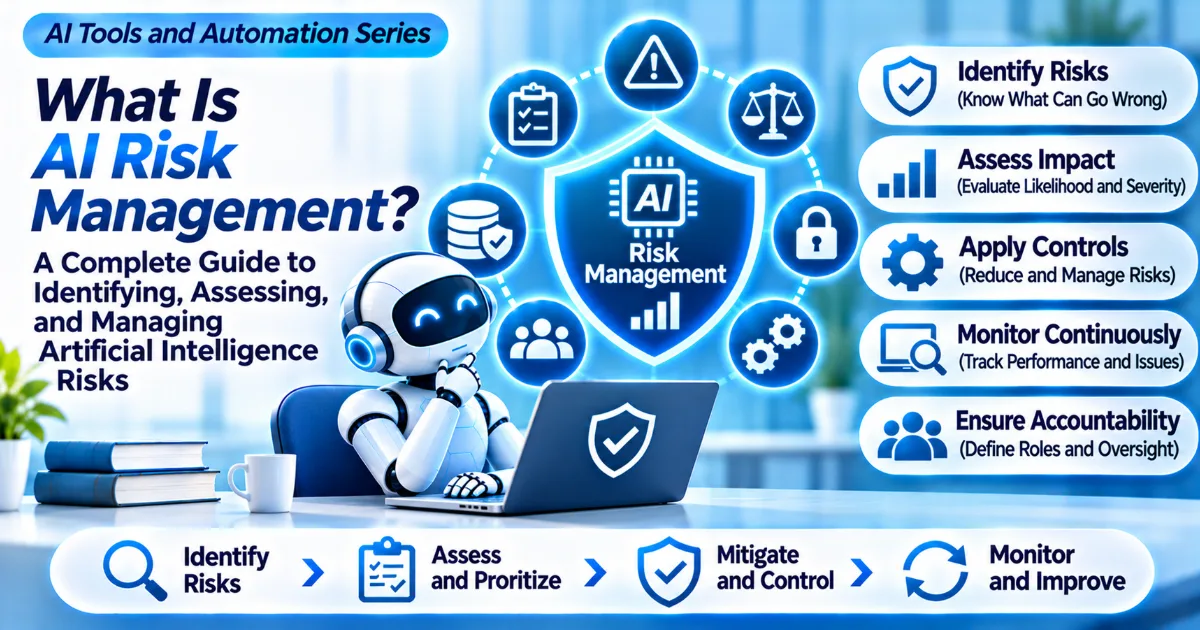
The National Institute of Standards and Technology developed the AI Risk Management Framework to help organizations manage risks associated with AI systems.
It provides a structured approach to identifying, assessing, and managing risks throughout the AI lifecycle.
European Union AI Act
The European Union's AI Act establishes a regulatory framework for artificial intelligence in the EU.
It uses a risk-based approach and includes requirements and restrictions for different categories of AI systems.
Organizations operating in or providing covered services within relevant jurisdictions should understand the law's scope, obligations, and implementation timelines.
India's Responsible AI Initiatives
India has been developing policy discussions and initiatives around responsible AI, including issues involving fairness, privacy, transparency, safety, inclusion, and public benefit.
Organizations operating in India should also consider applicable data protection, sector-specific, consumer protection, and other relevant legal requirements.
Ethical AI implementation should not be treated as a substitute for legal compliance.
How Businesses Can Implement AI Ethics
Businesses should not treat AI ethics as a document that is written once and then forgotten.
It should be incorporated into product development, procurement, deployment, employee training, and operational monitoring.
Step 1: Identify the Purpose of the AI System
Begin by defining what the system is supposed to accomplish.
A company should understand the problem it is trying to solve, who will use the system, and who may be affected by its outputs.
For example, an AI assistant used to summarize internal meetings has a different risk profile from an AI system used to assess loan applications.
Step 2: Conduct a Risk Assessment
Identify possible harms associated with the application.
Consider privacy, fairness, safety, security, misinformation, accessibility, and the consequences of incorrect outputs.
Assess both the likelihood and potential severity of these risks.
Step 3: Evaluate Data Quality and Permission
Review where the training or operational data comes from.
Check whether the organization has the appropriate rights and permissions to use the data.
Examine whether the dataset is accurate, sufficiently representative, and suitable for the intended purpose.
Step 4: Build Transparency into the Product
Users should receive appropriate information about when and how AI is being used.
The interface should make relevant limitations clear and avoid implying that generated outputs have been independently verified when they have not.
Step 5: Introduce Human Oversight
Determine which actions require human review or approval.
High-impact decisions, sensitive customer interactions, financial operations, and actions that are difficult to reverse may require stronger oversight.
Step 6: Test Fairness and Reliability
Evaluate how the system performs across relevant user groups and different operating conditions.
Use realistic test cases, including incomplete inputs, unusual scenarios, and potentially misleading information.
Step 7: Monitor the System After Deployment
AI systems can change in performance as data, users, models, and operating environments evolve.
Organizations should monitor errors, complaints, unexpected behaviour, security issues, and performance differences.
Step 8: Establish Accountability
Assign clear responsibilities for system approval, monitoring, incident management, and corrective action.
Employees should know whom to contact when the AI system produces a concerning result.
Step 9: Train Employees
Provide practical training on appropriate AI use, data privacy, verification, security, and escalation procedures.
Employees should understand that AI outputs are not automatically correct simply because they come from a sophisticated system.
AI Ethics for Developers
Developers play an important role because many ethical decisions are influenced by technical design choices.
A developer building an AI-powered application should think about privacy, security, fairness, and reliability from the beginning.
For example, consider a chatbot that answers customer questions using an internal company database.
The development team should ensure that the chatbot only retrieves information the user is authorized to access.
If different employees have different permissions, the retrieval system should respect those permissions rather than exposing all documents to every user.
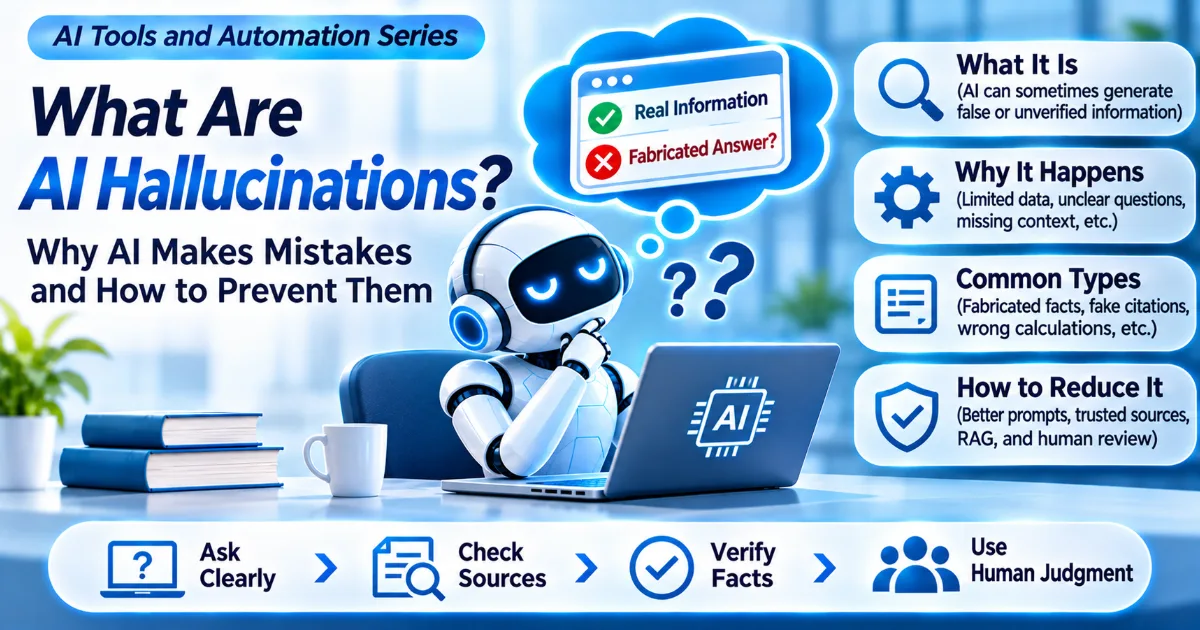
The system should also be designed to avoid inventing answers when relevant information cannot be found.
Developers should consider:
Secure authentication and authorization.
Appropriate data collection and retention.
Encryption and protection of sensitive information.
Input validation and output handling.
Protection against prompt injection and unsafe tool use.
Logging and monitoring of important operations.
Human approval for consequential actions.
Testing for bias and reliability.
Clear error handling and escalation.
AI safety is not achieved through prompts alone. It requires application-level controls, reliable software engineering, appropriate governance, and continuous testing.
AI Ethics for Everyday Users
AI ethics is not only the responsibility of developers and large organizations. Everyday users also influence how artificial intelligence is used.
A student using AI to prepare an assignment should avoid submitting fabricated references or presenting generated content as verified research.
A professional using AI to summarize a document should check whether the summary accurately reflects the original information.
A business owner generating marketing content should review factual claims, customer promises, and intellectual property considerations.
A social media user should avoid sharing AI-generated images or videos as genuine evidence when their authenticity has not been established.
Individuals should also be careful about uploading personal, financial, medical, or confidential business information into AI tools.
Responsible AI usage requires critical thinking.
Before accepting an AI-generated response, users should consider whether the information is accurate, whether the source is reliable, whether private information is involved, and whether the output could affect someone else.
A Practical AI Ethics Checklist for Organizations
Organizations introducing AI systems can use a simple checklist to structure their initial review.
Responsible AI readiness
This is a practical starting checklist, not a legal compliance assessment or certification.
The Future of AI Ethics
AI technologies are developing rapidly, and ethical questions will continue to evolve alongside them.
One important area is the growth of autonomous AI agents. These systems can use tools, retrieve information, make decisions within defined boundaries, and perform multiple actions.
As AI systems become more capable of taking action, organizations will need stronger permission controls, approval procedures, audit trails, and mechanisms for stopping unsafe operations.
Another important development is the increasing use of multimodal AI. Systems that process text, images, audio, and video may raise new concerns involving consent, identity, surveillance, and the authenticity of digital content.
Generative AI will also continue to create questions about copyright, attribution, misinformation, and ownership.
The impact of AI on employment will require attention as organizations redesign workflows and automate selected activities. Training and workforce transition policies will become important parts of responsible adoption.
AI governance is also likely to become more structured as countries introduce regulations and organizations adopt formal risk management practices.
Ultimately, ethical AI will require cooperation between technology companies, governments, researchers, businesses, educators, and the public.
The objective should not be to stop innovation. It should be to ensure that technological progress respects people and creates benefits that can be shared responsibly.
Conclusion
AI ethics is the study and practical application of principles that guide the responsible development and use of artificial intelligence.
It addresses important issues such as fairness, privacy, transparency, explainability, accountability, safety, human oversight, accessibility, and environmental responsibility.
These principles matter because AI systems can influence decisions that affect individuals, businesses, and society.
A system that produces impressive results but violates privacy, creates discrimination, or operates without accountability cannot be considered fully trustworthy.
Responsible AI requires more than good intentions. It involves careful data management, appropriate technical safeguards, meaningful human oversight, risk assessment, testing, monitoring, and clear organizational responsibilities.
For developers, this means designing systems with safety and privacy in mind. For businesses, it means evaluating the consequences of AI adoption rather than focusing only on productivity. For everyday users, it means verifying information, protecting personal data, and thinking critically about AI-generated content.
Artificial intelligence has the potential to solve important problems and improve many aspects of modern life. However, its long-term value will depend on how responsibly people choose to develop and use it.
The future of artificial intelligence should not be measured only by what machines can do, but also by how safely, fairly, and responsibly they do it.
Let's Discuss
What do you think is the biggest ethical challenge associated with artificial intelligence today?
Is it privacy, AI bias, job displacement, misinformation, deepfakes, copyright, or the growing use of automated decision-making?
Should businesses be required to disclose whenever AI is involved in decisions that affect customers or employees?
Share your thoughts and experiences. Understanding different perspectives is an important part of building a responsible AI future.
#AIEthics #ResponsibleAI #ArtificialIntelligence #AITrust #FutureOfAI